
Asian and Pacific Islander Focus Groups
Background
In October 2021, North Seattle College (NSC) was awarded a 5-year federally funded Asian American & Native American Pacific Islander Serving Institution (AANAPISI) grant to enhance the institutions capacity to serve Asian and Pacific Islander students (A&PI) and low-income students. NSC, an AANAPISI-funded institution, is committed to understanding the experiences, needs, and challenges of A&PI students and enhancing their academic success.
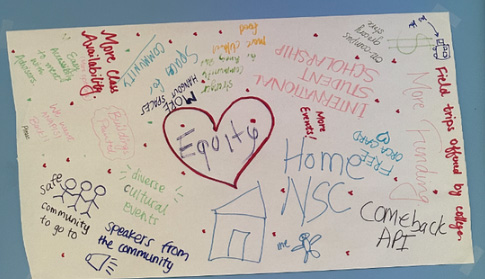
The purpose of the focus groups and reports are to present the findings from a series of focus group discussions conducted with Asian and Pacific Islander students at North during academic years 2022-2023 (Y2), 2023-2024 (Y3), 2024-2025 (Y4), and 2025-2026 (Y5) . These discussions were driven by the need to gain valuable insights, voice concerns, and identify strategies for enhancing the AANAPISI programs' effectiveness in supporting North Seattle Colleges' A&PI student community. By engaging directly with A&PI students, we gain a deeper understanding of their experiences, perspectives, and aspirations within the college environment, and inform institutional efforts to address their specific needs.
| Year | Focus Group #1 Conducted on | # of participants | Focus Group #2 Conducted on | # of participants | Focus Group Topics | Total # of participants |
|---|---|---|---|---|---|---|
| 2 | 2/28/2023 | 6 | 6/6/2023 | 4 | Sense of Belonging and Student Experience | 10 students |
| 3 | 4/24/2024 | 14 | 5/22/2024 | 11 | Sense of Belonging, Student Services, First Year Experience | 25 students |
| 4 | 5/15/2025 | 12 | NA | NA | Sense of Belonging, Student Services, First Year Experience | 12 students |
| 5 | 5/7/2026 | 15 | NA | NA | A&PI Student Experience, Future's Thinking: Ideal college campus, Student Representation | 15 students |
Total: 62 students
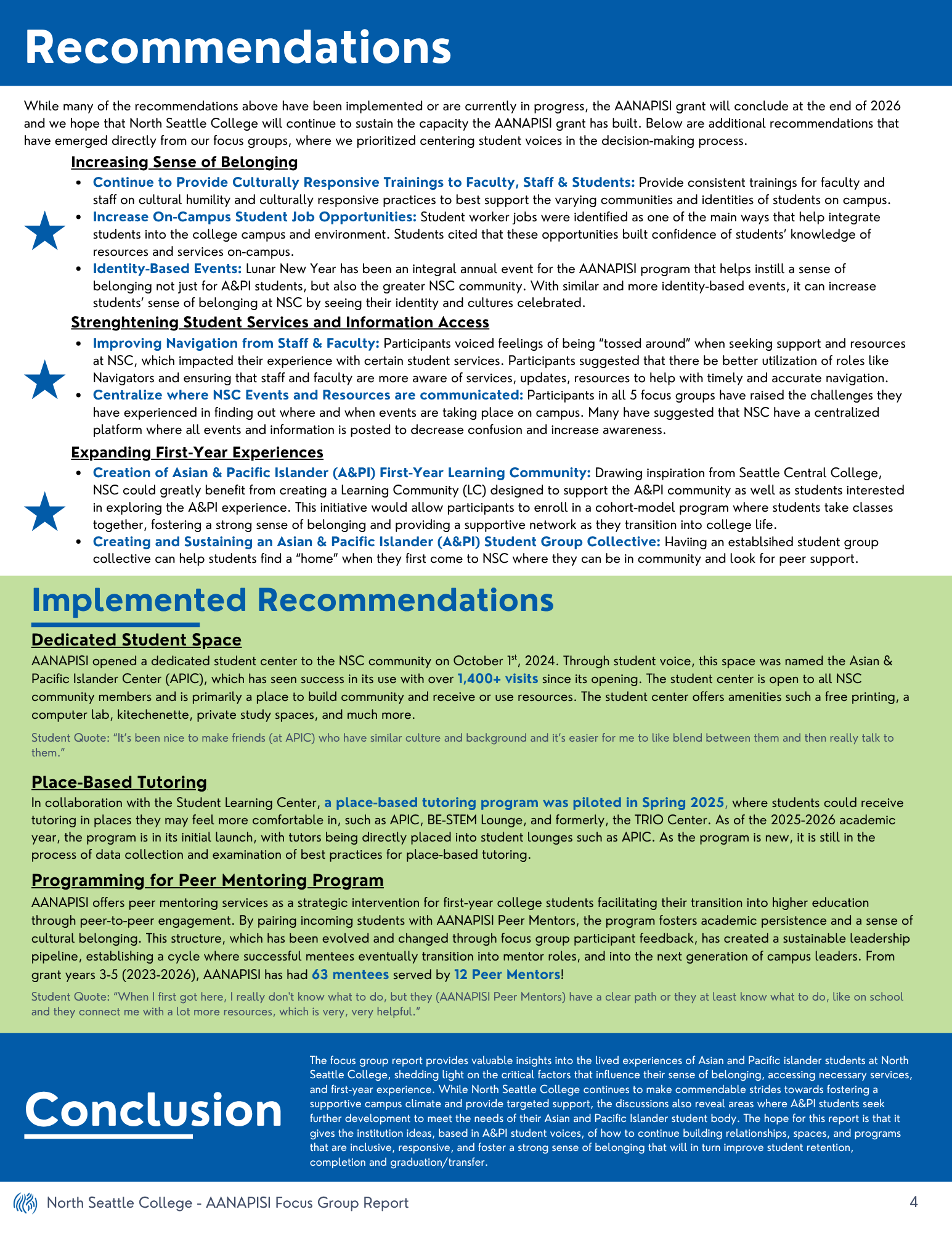
The purpose of this report (PDF) is to summarize the findings and recommendations from a series of 5 focus groups conducted with 47 Asian and Pacific Islander students at North Seattle College during Years 2, 3, and 4 of the grant (2022-2025). This was used to present to faculty and staff at professional development day in Year 5 (2026).
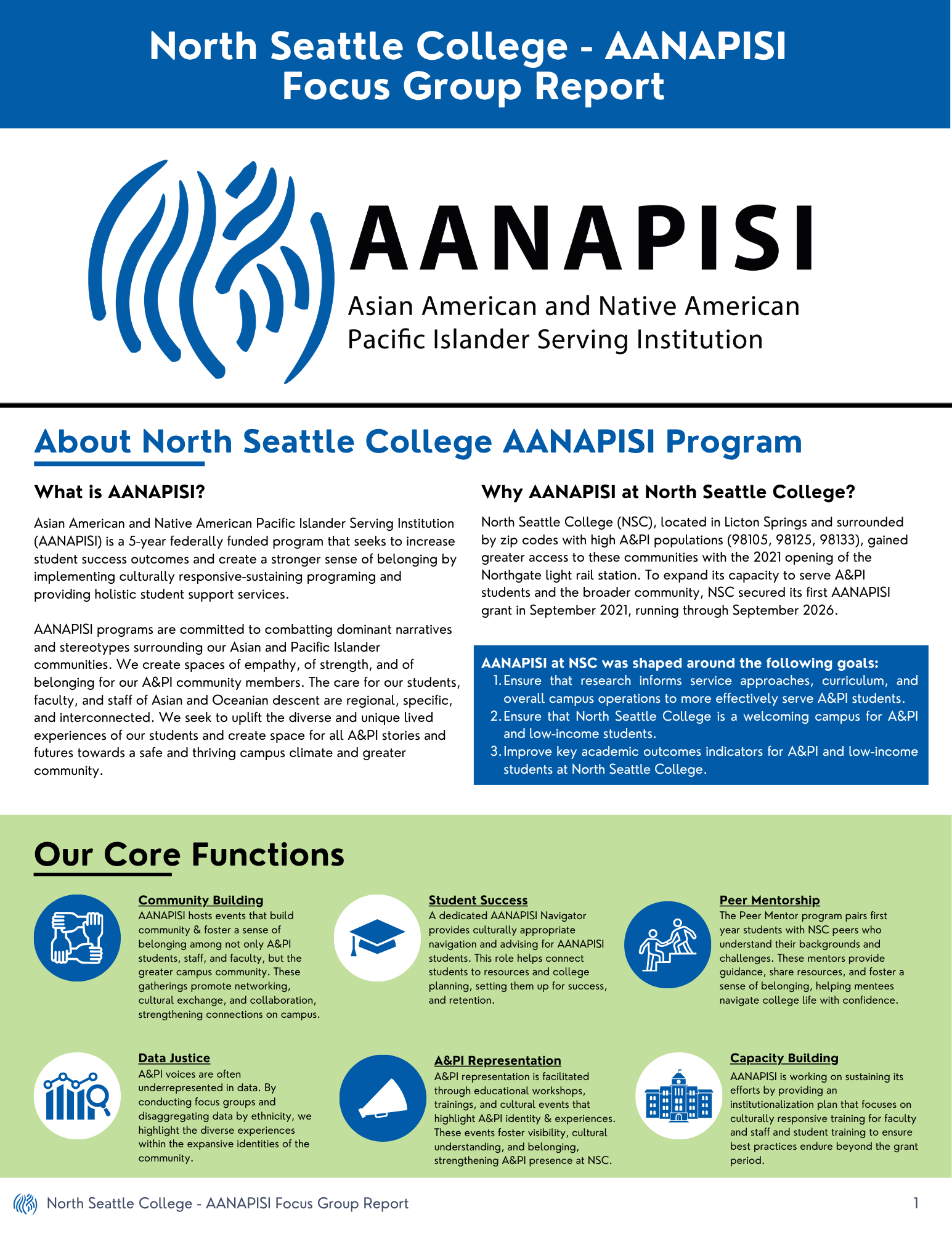
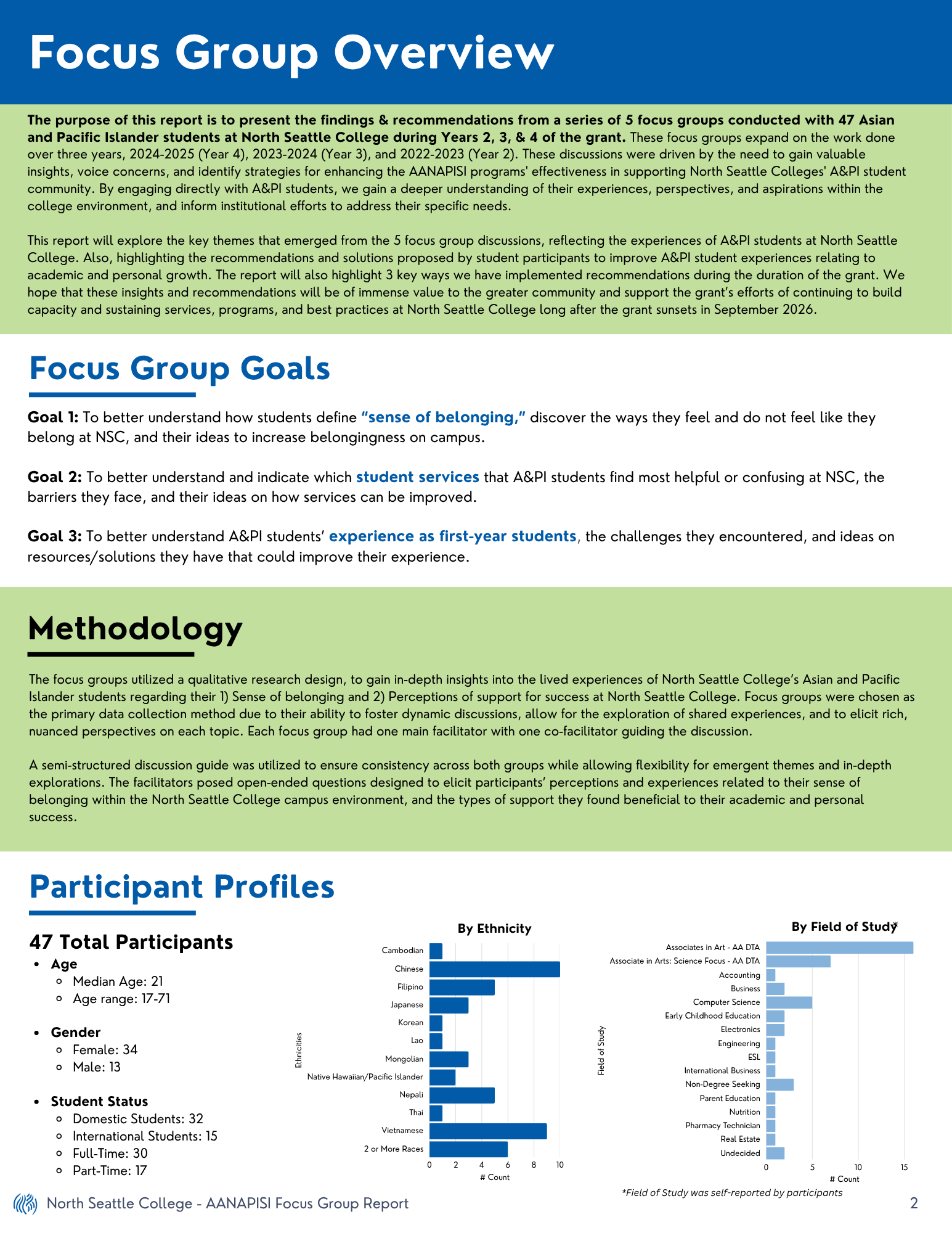
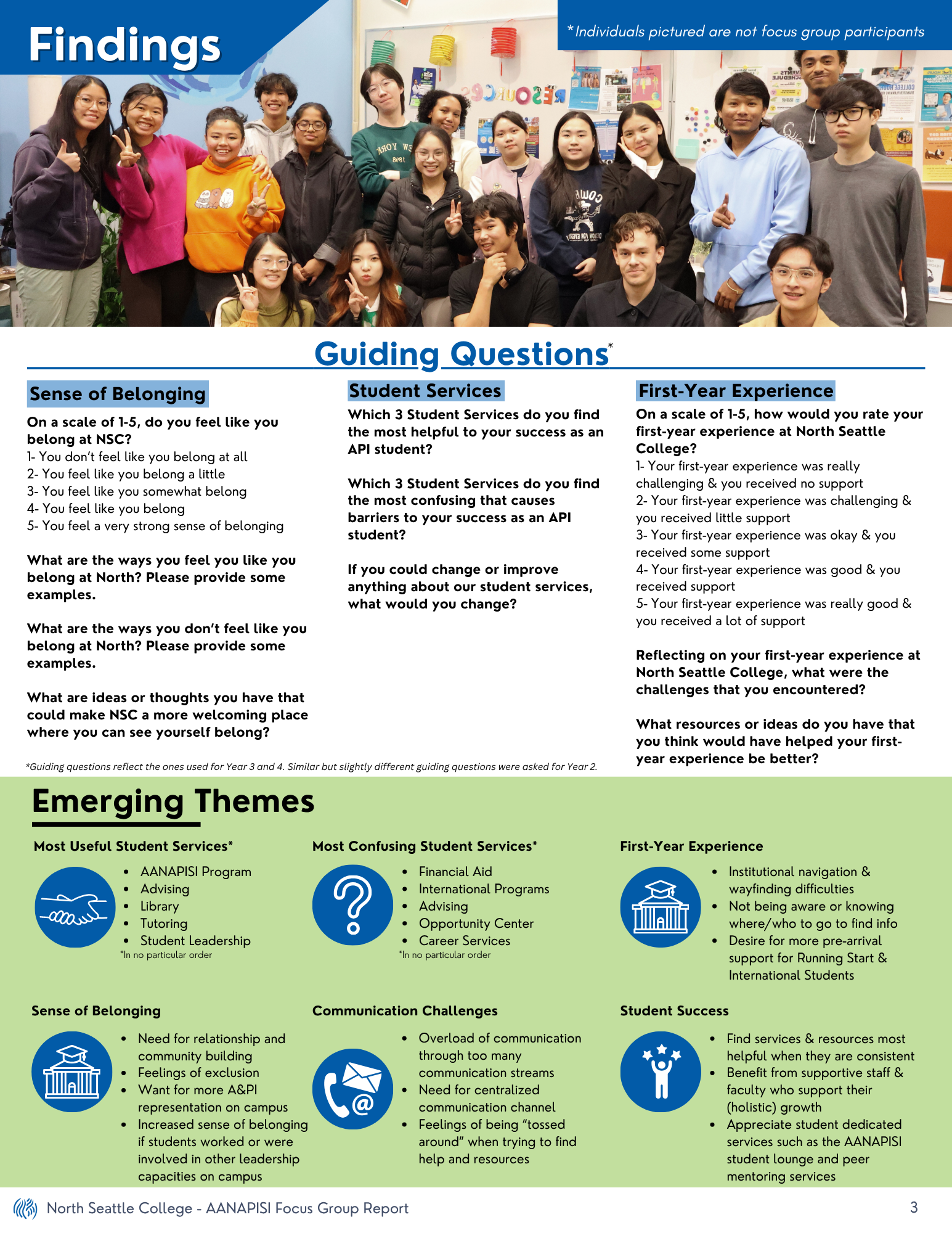
*students pictured here is from an AANAPISI event, not from the focus group
View and access the full reports for each focus group:
Research Design
This study utilized a qualitative research design, specifically facilitating focus group discussions to gain in-depth insights into the lived experiences of North's Asian and Pacific Islander students regarding their
- Sense of belonging and
- Perceptions of support for success at North Seattle College
Focus groups were chosen as the primary data collection method due to their ability to foster dynamic discussions, allow for the exploration of shared experiences, and to elicit rich, nuanced perspectives on each topic.
Sample Selection/Eligibility
Participants were selected based on specific pre-qualification criteria to ensure the relevance and focus of the discussions. The criteria for participation were as listed:
- Self-identification as Asian and/or Pacific Islander, and
- Current enrollment as a student at North Seattle College
Recruitment
Participants were recruited through a mixed-method approach including purposive and convenient snowball sampling methods. An email campaign was sent specifically to students at North Seattle College who had self-identified as Asian and Pacific Islander and met the participation requirements. Additionally, a series of internal emails and Canvas announcements targeting AANAPISI enrolled students were sent. Furthermore, a convenience sampling method was deployed by posting visually appealing flyers in high traffic areas around campus and utilizing AANAPISI social media accounts. Finally, a snowball sampling method was utilized to expand our reach to more participants. To incentivize students to participate in this study, AANAPISI gave out gift cards (funded by Student & Activities Fee Board) as well as provided light refreshments.
Data was collected through a 1.5-hour focus group session, with one main facilitator, one support facilitator, and one notetaker. A semi-structured discussion guide was utilized to ensure consistency across both groups while allowing flexibility for emergent themes and in-depth explorations. The facilitators posed open-ended questions designed to elicit participants’ perceptions and experiences related to their sense of belonging within the North Seattle College campus environment, and the types of support they found beneficial to their academic and personal success. The focus group was audio-recorded with the explicit consent of the participants to ensure accurate capture of the discussions. Detailed notes were also taken to document non-verbal cues, group dynamics, and contextual observations.
The audio recordings from the focus group were transcribed verbatim to facilitate comprehensive data analysis. Thematic analysis, an iterative and systematic process for identifying, analyzing, and reporting patterns (or themes) that arise within the data, was employed to analyze the qualitative data. The analysis processed involved several stages:
- AANAPISI staff independently familiarized themselves with the data through repeated reading of transcripts;
- Initiated coding to identify interesting features across the entire dataset;
- Searching for themes by collating codes into broader potential themes;
- Reviewing themes to ensure they are coherent and distinct;
- Defining and naming themes with the support of AI ChatGPT;
- Producing the report; and
- Finding discrepancies in coding and theme identification, which were discussed and resolved through consensus.