
Honoring the Land – The Kumasaka Family Art Dedication
The Kumasaka Family Legacy
Read a viewable PDF of the Kumasaka Family history at NSC.
About the Kumasaka Family
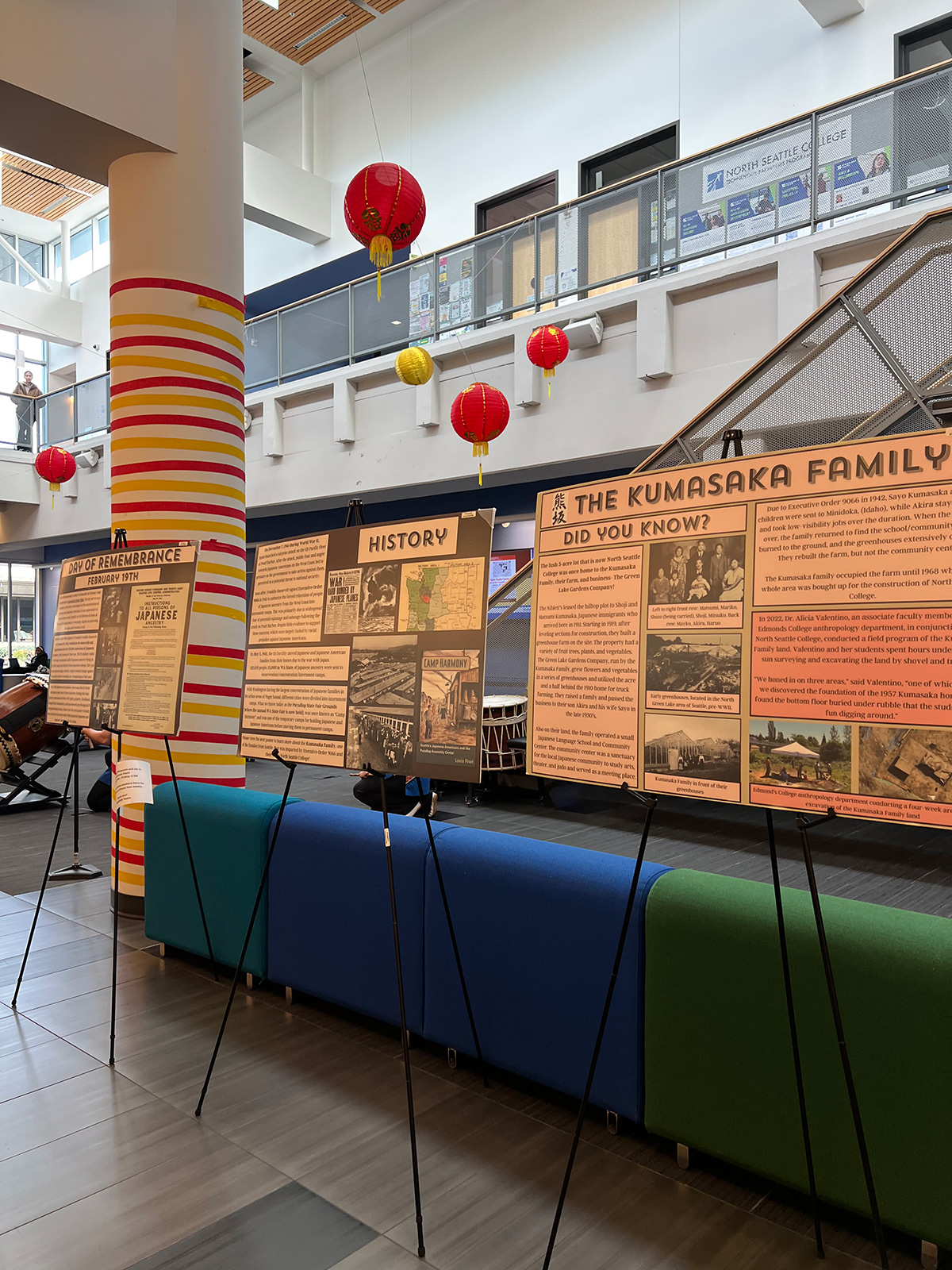
Shoji Kumasaka immigrated to Seattle from Japan in 1907 and in 1911, leased farm land with greenhouses at 85th & Latona. They moved the operation to 100th & Meridian in 1919, after the first World War. Shoji married Matsumi and had seven children. The property was owned by Henry Niblett, who built a farmhouse on the land in 1910. As a first-generation Japanese immigrant, Shoji was not legally allowed to buy property until 1928, when it was legally purchased in the name of their oldest son, Akira —who was a US citizen, born in Seattle, and graduate of Roosevelt High School. In 1936, Shoji passed the business down to Akira and his wife, Sayo.
Due to World War II and Executive Order 9066 in 1942, an estimated 120,000 people of Japanese ancestry were forcibly removed from their homes and relocated to concentration camps. Japanese Americans were forced to sell their homes, farms, and businesses, losing almost everything within weeks. Akira, Sayo, their two daughters, and the entire Japanese community were first incarcerated at the Puyallup Assembly Center (Camp Harmony), before being sent to the Minidoka Internment Camp in Idaho. The family returned in 1946 and kept the farm going until 1968.
Despite the displacement of the family after the war, the Kumasaka family and their descendants have continued to thrive and build their own families and livelihood across the U.S. To learn more about the family, visit their family website.
About the Land of North Seattle College
The Green Lake Gardens Company grew flowers and vegetables and utilized the acre and a half behind the home for truck farming. The Kumasaka family was widely known for selling their produce and flowers at Pike Place Market. The Kumasaka farm became a community hub for Japanese American residents and business owners, providing a space where new immigrants could establish roots and forge social connections through the Japanese Language School and Community Center located on the property.
After World War II ended and the Kumasaka’s returned home after 4 years of incarceration, the family found the school and community center burned to the ground, and the greenhouses extensively damaged. The family mourned the land’s deterioration after years of nurturing it. The family rebuilt the farm and kept the business going until 1968 when the land was sold for construction of North Seattle College. Later, the land was converted to Barton Woods Park.
In 2023, North Seattle College and Edmonds College Anthropology Department partnered together to conduct two archaeological field excavations on the land. This field program not only introduced students to the archaeological field and lab methods but also revisited an overlooked part of the Japanese community that once occupied this unique piece of property.
The Lasting Legacy of the Kumasaka Family on North Seattle College
Annually, on Day of Remembrance, North Seattle College celebrates the lives and legacy of the Kumasaka family and those impacted by Executive Order 9066. Executive Order 9066, signed by President Franklin Roosevelt on February 19, 1942, resulted in the mass exile and imprisonment of over 120,000 Americans of Japanese ancestry, solely because of their race. The US military exiled every man, woman and child of Japanese ancestry living on the West Coast, two-thirds of them American citizens. They put them in prison camps, without a single criminal charge against them and no trials to establish any wrongdoing on their part. Day of Remembrance is observed annually in February and commemorates Executive Order 9066. The day serves as a reminder of the history and impact of the incarceration of Japanese and Japanese Americans. It is an opportunity to educate others on the fragility of civil liberties in times of crisis, and the importance of remaining vigilant in protecting the rights and freedoms of all.
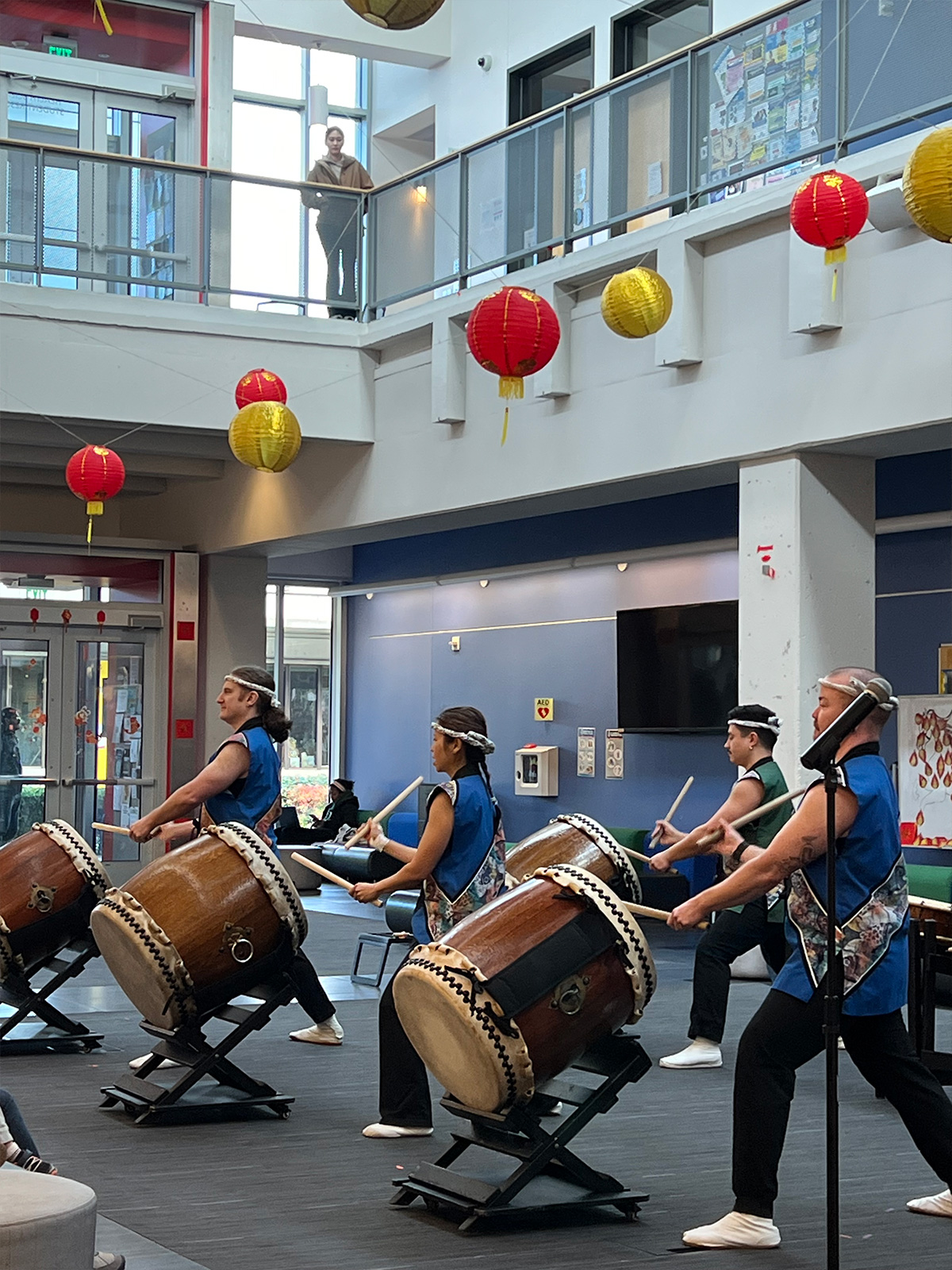
During the week of the Day of Remembrance, AANAPISI presents a Walking Library highlighting the history and legacy of the Kumasaka family and the lasting impact of Executive Order 9066. In collaboration with the Visibility Committee and the Office of Access, Community, and Opportunity, AANAPISI also hosts a commemorative event featuring Japanese cultural activities, including Taiko performances and traditional foods. The event honors the past by recognizing the experiences and contributions of Japanese Americans while looking toward the future by fostering a more inclusive campus environment.
In 2026, AANAPISI acquired works of art by local artist, Stevie Shao, to commemorate the Kumasaka’s lasting impact on North Seattle College. On May 28th, 2026, an art dedication and unveiling was hosted for the community, with many members of the Kumasaka Family in attendance.
Read more in a viewable pdf of Art Dedication Signage.